


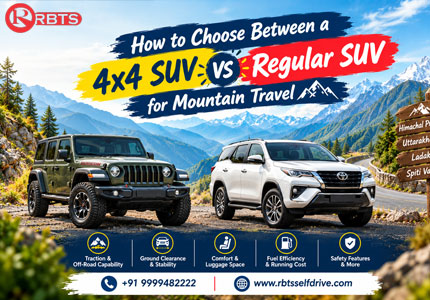
Discover how to choose between a 4x4 SUV and a regular SUV for mountain travel with a detailed comparison of driving performance, traction, ground clearance, passenger comfort, fuel efficiency, and safety features. Learn which SUV is s
How to Choose Between a 4x4 SUV and a Regular SUV for Mountain Travel
Mountain journeys offer unforgettable experiences, from winding Himalayan roads and peaceful valleys to breathtaking viewpoints and charming hillside villages. However, choosing the right vehicle is an important part of enjoying these adventures comfortably. When comparing a 4x4 SUV vs regular SUV for mountain travel, travellers should understand the differences in traction, driving performance, ground clearance, passenger comfort, and suitability for changing road conditions.
Both four-wheel-drive SUVs and regular SUVs can be excellent choices for mountain holidays, depending on the destination and driving requirements. While a 4x4 vehicle may provide additional traction on certain challenging surfaces, a regular SUV can offer comfortable performance on paved highways and well-maintained hill roads. Travellers interested in exploring Himachal Pradesh, Uttarakhand, Kashmir, or other beautiful Himalayan destinations can review available self drive SUV rental options in Delhi before selecting a suitable vehicle for their journey.
Understanding the Difference Between a 4x4 SUV and a Regular SUV
The primary difference between a 4x4 SUV and a regular SUV lies in how engine power reaches the wheels. A traditional 4x4 SUV can distribute power to both the front and rear axles, providing additional traction in certain driving situations. Depending on the model, four-wheel-drive systems may include selectable driving modes, low-range gearing, or other features designed for challenging terrain.
A regular SUV generally uses a two-wheel-drive configuration, sending power to either the front or rear wheels. These vehicles are commonly designed for everyday driving, highways, and well-maintained mountain roads. Some SUVs also feature all-wheel-drive systems, which differ from traditional selectable four-wheel-drive arrangements. Understanding these distinctions helps travellers choose a vehicle according to their actual journey requirements.
Why Road Conditions Matter When Choosing an SUV
Road conditions are among the most important factors when deciding between a 4x4 SUV and a regular SUV for hill travel. Popular mountain destinations often have paved roads suitable for conventional passenger vehicles. However, remote areas may include uneven surfaces, loose gravel, steep approaches, and sections affected by seasonal weather.
For example, journeys towards Shimla, Dharamshala, Dalhousie, and many established tourist destinations generally involve paved roads, although conditions can change. Travellers exploring remote regions of Spiti Valley or selected Himalayan routes may encounter more demanding road surfaces. Before choosing a vehicle, checking local road advisories and confirming the intended route's accessibility is essential.
When Is a Regular SUV Suitable for Mountain Travel?
A regular SUV for mountain road trips can be a practical choice when travelling primarily on maintained highways and paved hill roads. These vehicles often provide comfortable seating, useful luggage capacity, and a higher driving position compared with many smaller passenger cars.
Regular SUVs can be suitable for family holidays, weekend getaways, and sightseeing journeys where difficult terrain is not expected. Travellers interested in a comfortable vehicle for such routes can explore options like the Hyundai Creta self drive rental. The suitability of any vehicle should be confirmed according to its specific configuration, condition, and the selected destination.
When Should You Consider a 4x4 SUV for Mountain Adventures?
A 4x4 SUV for Himalayan road trips may be worth considering when the intended route includes loose surfaces, steep unpaved approaches, or conditions where additional traction could be beneficial. Four-wheel-drive vehicles are designed to improve power distribution between the axles, although their actual capability depends on tyres, ground clearance, drivetrain configuration, and driver experience.
For travellers interested in vehicles designed with additional off-road capability, the Jeep Wrangler Rubicon self drive SUV is an example worth exploring. Before booking, travellers should confirm whether the selected route is permitted under the rental agreement. A 4x4 system does not make unsafe roads, deep snow, ice, or landslide-affected routes automatically safe.
Comparing Traction and Driving Performance on Steep Roads
Traction refers to the grip between a vehicle's tyres and the road surface. On dry, paved mountain roads, a properly maintained regular SUV can often provide sufficient traction for normal driving. Modern traction-control and stability systems may also help manage wheel slip in certain situations.
A four-wheel-drive SUV for mountain journeys can offer additional traction when accelerating on suitable loose or slippery surfaces. However, four-wheel drive does not necessarily improve braking distances or cornering grip. Tyre condition, appropriate speed, vehicle load, and careful driving remain essential regardless of the drivetrain.
Ground Clearance: Does a 4x4 SUV Always Have an Advantage?
Ground clearance is the distance between the vehicle's lowest point and the road surface. It becomes important when travelling over uneven roads, deep potholes, or steep approaches. Vehicles with additional clearance may be less likely to scrape their underbody when encountering certain obstacles.
However, not every 4x4 SUV has greater ground clearance than every regular SUV. Ground clearance depends on the specific vehicle model and configuration. Travellers comparing ground clearance for mountain driving should also consider wheelbase, approach angle, departure angle, tyre size, and suspension design rather than assuming that four-wheel drive automatically means greater clearance.
4x4 SUV vs Regular SUV: Comfort During Long Road Trips
Comfort becomes particularly important when travelling long distances through winding mountain roads. Both regular SUVs and 4x4 vehicles can provide comfortable cabins, supportive seating, air conditioning, and convenient technology features, depending on the selected model.
Some traditional off-road-focused 4x4 vehicles prioritise rugged capability, while certain road-oriented SUVs may offer a smoother ride on highways. However, these differences vary considerably between models. Travellers choosing a comfortable SUV for family mountain holidays should compare seating arrangements, cabin space, luggage capacity, suspension comfort, and overall driving experience.
Fuel Efficiency and Travel Expenses: Which SUV Is More Economical?
Fuel consumption can influence the total cost of a mountain holiday, particularly when travelling several hundred kilometres. Four-wheel-drive vehicles may consume more fuel than comparable two-wheel-drive versions because of additional drivetrain components and vehicle weight. However, actual mileage depends on engine specifications, transmission, driving conditions, and vehicle design.
A regular SUV for long-distance road travel may provide a more economical option for travellers who do not require additional off-road capability. Before booking, compare rental charges, expected fuel consumption, mileage allowances, security deposits, and other applicable expenses to understand the overall journey cost.
Which SUV Is Better for Himachal Pradesh Road Trips?
Himachal Pradesh offers a wide variety of travel experiences, from popular hill stations to remote Himalayan villages. Destinations such as Shimla, Manali, Dharamshala, and Dalhousie are commonly reached through paved mountain roads, although temporary restrictions and difficult conditions can occur during adverse weather.
For these established tourist routes, a well-maintained regular SUV may be sufficient when conditions are favourable. Travellers interested in remote areas, including selected routes towards Spiti Valley, should evaluate whether a more capable vehicle is appropriate. Choosing a self drive SUV for Himachal Pradesh should always involve checking weather conditions, road accessibility, and rental permissions before departure.
Choosing an SUV for Leh Ladakh and Spiti Valley Adventures
Leh Ladakh and Spiti Valley attract adventure enthusiasts with their spectacular high-altitude landscapes, mountain passes, traditional villages, and unforgettable road journeys. However, travel conditions in these regions can differ significantly from ordinary highway driving.
Some routes may involve loose gravel, water crossings, damaged road surfaces, and significant altitude changes. A suitable 4x4 rental SUV for Ladakh and Spiti Valley may offer useful traction capabilities on certain difficult sections, but four-wheel drive is not universally required for every route. Travellers should check current road conditions, vehicle suitability, local restrictions, and rental permissions before attempting these journeys.
Understanding the Importance of Tyres and Braking Performance
Tyres and brakes are critical components of safe mountain driving. Even a capable four-wheel-drive vehicle can struggle when fitted with unsuitable or worn tyres. Tyre tread, inflation pressure, and the type of road surface influence traction and vehicle control.
Braking performance is equally important on steep descents and winding roads. Travellers should use appropriate gears to assist with speed control and avoid prolonged unnecessary braking. Whether choosing a 4x4 SUV or regular SUV for mountain roads, checking tyre condition and braking performance before departure should remain a priority.
Manual vs Automatic SUVs for Himalayan Road Journeys
Transmission selection can affect driving comfort, particularly during long journeys and steep mountain climbs. Automatic SUVs reduce the need for frequent manual gear changes and may offer a more convenient driving experience in heavy traffic or on winding roads.
Manual SUVs provide direct control over gear selection and may appeal to experienced drivers who prefer a traditional driving experience. Both transmission types can be suitable for mountain travel when operated correctly. Travellers comparing manual vs automatic SUVs for hill driving should consider their experience, route conditions, and the vehicle's available driving modes.
Safety Features to Check Before Renting an SUV
Safety should remain a priority when selecting any rental vehicle for mountain travel. Depending on the model and variant, useful features may include anti-lock braking systems, electronic stability control, traction control, hill-start assistance, airbags, and hill-descent control.
Before accepting a self drive SUV rental for mountain travel, travellers should inspect the tyres, brakes, lights, mirrors, seat belts, and essential vehicle documents. Understanding the vehicle's controls and driving modes is also important, particularly when operating an unfamiliar four-wheel-drive system.
How Passenger Capacity and Luggage Space Affect SUV Selection
The number of passengers and amount of luggage can influence which SUV is suitable for a mountain journey. Couples and small families may prefer compact or midsize SUVs, while larger groups may require vehicles with additional seating capacity.
Some off-road-focused vehicles provide excellent traction capability but may have limited luggage space compared with larger family-oriented SUVs. When selecting a family SUV rental for Himalayan holidays, travellers should consider usable luggage capacity with all required seats occupied, passenger comfort, and the approved seating capacity of the vehicle.
Important Rental Policies to Review Before Mountain Travel
Understanding rental terms is essential before taking a vehicle on a long-distance journey. Rental agreements may specify permitted destinations, mileage allowances, security deposits, insurance conditions, fuel policies, and additional charges.
Travellers considering a 4x4 self drive car rental should confirm whether travel on remote roads or unpaved routes is permitted. Some rental providers restrict off-road driving even when the vehicle has four-wheel-drive capability. Reviewing these conditions in advance helps avoid unexpected expenses and difficulties during the journey.
Essential Driving Tips for 4x4 and Regular SUVs in the Mountains
Mountain driving requires concentration, patience, and careful decision-making. Drivers should maintain appropriate speeds, avoid unnecessary overtaking, and remain alert on narrow roads with limited visibility. Taking regular breaks can also help reduce fatigue during long journeys.
Before beginning a Himalayan road trip by SUV, travellers should review weather forecasts, road advisories, and available fuel stations. Carrying essential supplies, suitable clothing, drinking water, and offline navigation maps can be helpful in remote areas. Drivers should never attempt dangerous crossings or closed routes simply because their vehicle has four-wheel-drive capability.
4x4 SUV vs Regular SUV: Which Is Better for Family Holidays?
For many family holidays involving paved highways and established tourist destinations, a regular SUV can provide a comfortable and practical travel experience. These vehicles may offer suitable passenger space, convenient driving features, and potentially lower rental and fuel expenses.
A 4x4 SUV may be more appropriate when the journey includes permitted routes with challenging surfaces where additional traction is useful. However, families should prioritise comfort, safety, luggage capacity, and road suitability rather than choosing a vehicle solely because it has four-wheel drive.
Common Mistakes to Avoid When Choosing an SUV for Mountain Travel
One common mistake is assuming that every SUV is suitable for difficult mountain terrain. Vehicle capability varies considerably between models, and a high driving position does not automatically provide off-road performance. Another mistake is believing that four-wheel drive guarantees safety on snow-covered or icy roads.
Travellers should also avoid selecting a vehicle without considering passenger requirements, luggage capacity, fuel expenses, and rental restrictions. Comparing actual vehicle specifications and understanding the intended route are essential steps when choosing the best SUV for mountain road trips.
How to Make the Right SUV Choice for Your Travel Destination
The most suitable vehicle depends on the type of journey you intend to undertake. For regular highway travel and popular hill stations, a comfortable two-wheel-drive SUV may provide everything required for an enjoyable holiday. For selected remote routes involving loose or uneven surfaces, a properly equipped 4x4 vehicle may offer additional capability.
Before making a decision, consider your destination, expected road conditions, driving experience, passenger requirements, luggage needs, and travel budget. Exploring available SUV and 4x4 self drive car rental options can help you compare vehicles and identify a suitable choice for your journey.
Explore Mountain Adventures with RBTS Self Drive Cars
Discover beautiful mountain destinations and enjoy greater flexibility during your road journeys with RBTS Self Drive Cars. Whether you prefer a comfortable SUV for a family holiday or a capable four-wheel-drive vehicle for a permitted adventure route, selecting the right rental car can make your travel experience more convenient.
Explore available self drive car rental services in Delhi and compare vehicle options according to your travel preferences. Confirm availability, permitted destinations, rental conditions, and vehicle suitability before finalising your reservation.
Final Verdict: Should You Choose a 4x4 SUV or a Regular SUV?
The decision between a 4x4 SUV and a regular SUV for mountain travel depends primarily on the route and driving conditions. A regular SUV is often a practical choice for paved highways, established hill stations, and comfortable family journeys. A 4x4 SUV can provide additional traction on certain challenging surfaces, making it worth considering for suitable remote mountain routes.
Neither vehicle type guarantees safety in adverse conditions. Responsible driving, appropriate tyres, proper vehicle maintenance, and attention to local travel advisories remain essential. Choose a vehicle that matches your actual travel requirements and enjoy the beautiful landscapes of North India with confidence.
Find Your Ideal SUV for a Memorable Mountain Journey
From the peaceful valleys of Himachal Pradesh to the breathtaking landscapes of Uttarakhand, Kashmir, and Ladakh, North India offers unforgettable opportunities for road travel. Selecting a suitable SUV allows travellers to experience these destinations with greater comfort and flexibility.
Explore available vehicles and booking information at www.rbtsselfdrive.com and discover rental options for your next Himalayan road adventure.